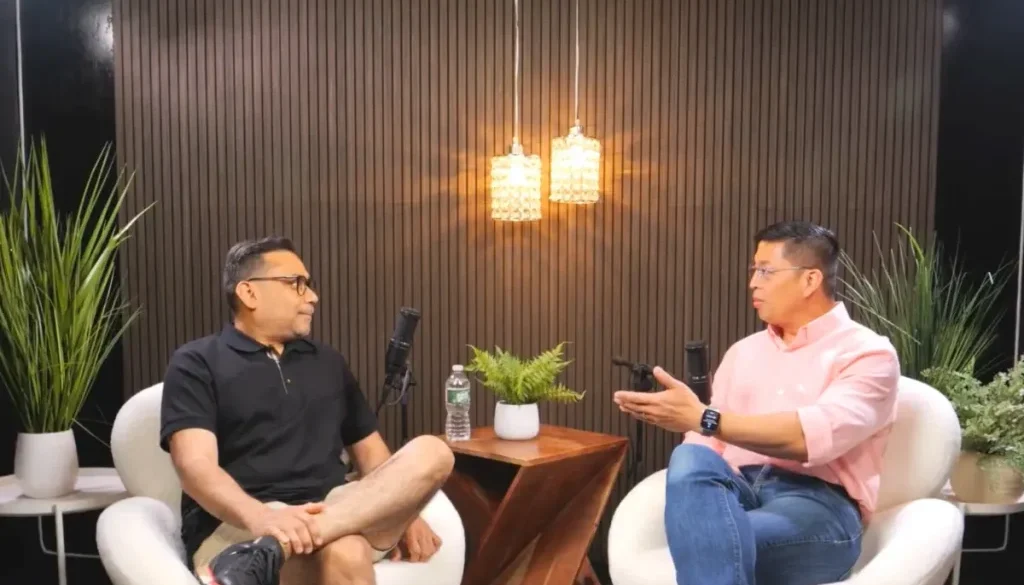
Overcoming Mic Fright Before You Record
You sit down in a recording chair, adjust the microphone, and see the red recording light turn on. Suddenly, your mouth feels dry, your heart beats faster, and your mind goes blank. This sensation is known as mic fright, and it happens to beginners and experienced speakers alike.
Speaking into a microphone or looking directly into a lens can feel unnatural. Your brain treats the microphone like an audience that is judging every word you say. Fortunately, you can train your body and mind to settle down before you press record. With simple preparation, physical warm-ups, and the right recording space, you can feel confident and deliver your message clearly.
Key Takeaways
- Mic fright is a normal physical reaction that you can manage with preparation and breathing exercises.
- Preparing an outline instead of a full script keeps your speech natural and reduces pressure.
- Physical warm-ups help release physical tension in your jaw, neck, and shoulders.
- Recording in a comfortable studio with hands-on technical support removes equipment-related stress.
Understanding What Causes Podcast Nerves
Before you can fix the problem, it helps to understand why podcast nerves occur in the first place. When you prepare to record, your fight-or-flight system can kick in. Your body reacts to the pressure of being recorded just as it would to any high-stakes situation.
Common triggers for these nerves include:
- Fear of making mistakes: You worry about stumbling over words, losing your train of thought, or sounding uneducated.
- Unfamiliar equipment: Staring at professional microphones, boom arms, and audio mixers can make you feel out of your depth.
- Hearing your own voice: Many people dislike the sound of their recorded voice, which creates hesitation while speaking.
- Red light pressure: The simple act of seeing a recording indicator can make you feel like you must perform perfectly on the first try.
Remember that recording a podcast is rarely a live broadcast. If you make a mistake, you can pause, take a breath, and repeat the sentence. Editors can easily cut out pauses and stumbles later.
Simple Ways to Handle Camera Anxiety
Many modern podcasts include video alongside audio. Adding video means you might experience camera anxiety along with microphone stress. Being on camera adds another layer of self-consciousness because you have to think about your posture, hand gestures, and facial expressions.
Here are a few practical ways to manage your anxiety on camera:
- Focus on your conversation partner: If you have a guest or co-host, look directly at them rather than staring at the camera lens. This makes your video feel like an everyday chat.
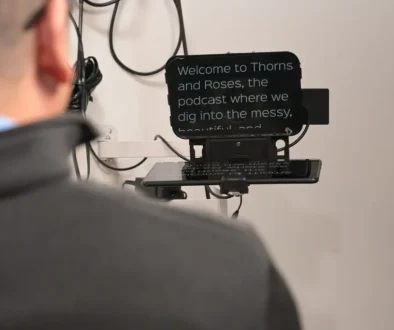
- Use natural reference tools: If you need help remembering key points, use a mobile teleprompter placed near the camera line. This prevents you from looking down at messy notes.
- Dress for comfort and confidence: Wear clothing that fits well and feels comfortable when seated. Avoid tight collars or itchy fabrics that distract you during the shoot.
- Accept small imperfections: Natural conversations include head tilts, hand movements, and laughter. You do not need to sit perfectly still like a news anchor.
Pro Tip: Do a two-minute test recording before your actual session. Watching a short playback helps you fix your posture and settle into your seat before the real conversation begins.
Why a Comfortable Studio Setting Matters
Your physical environment plays a massive role in how calm you feel. Trying to record in a noisy home office or an echo-filled room adds unnecessary worry about background noise and technical issues.
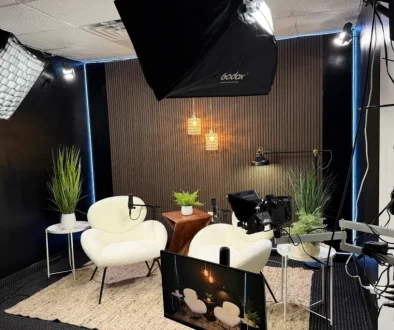
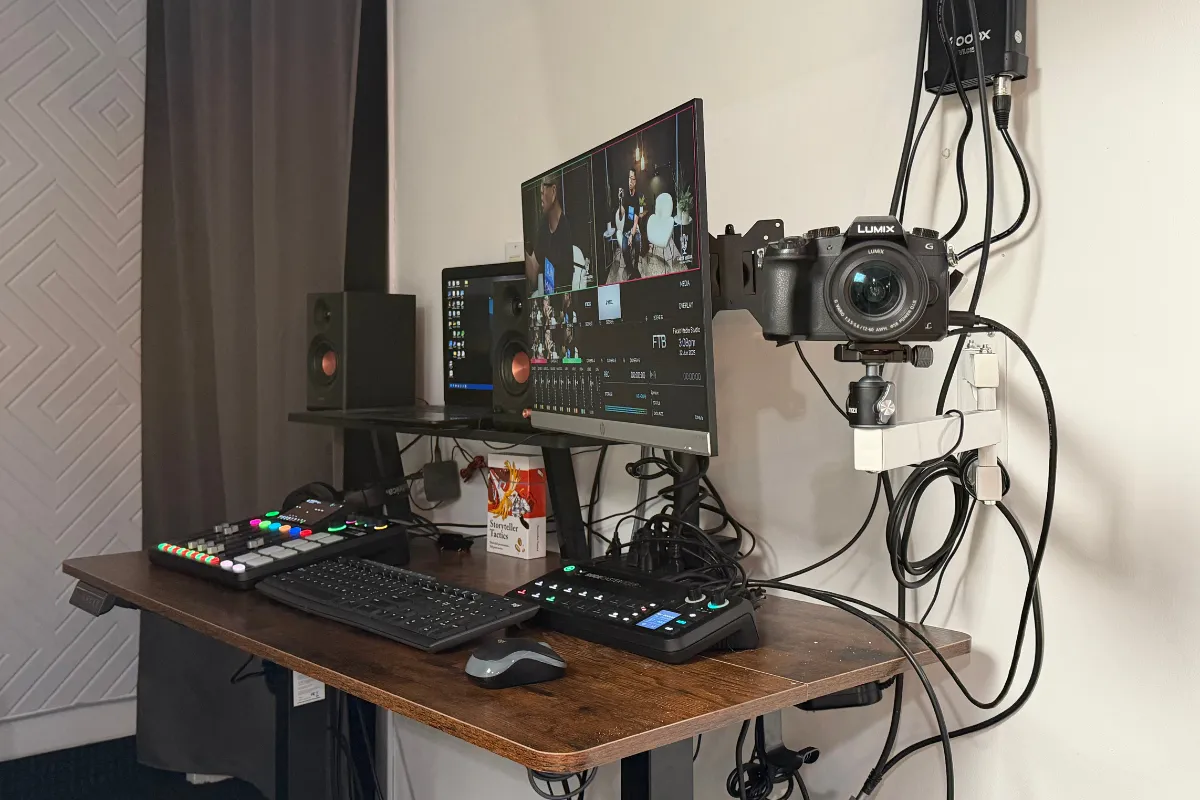
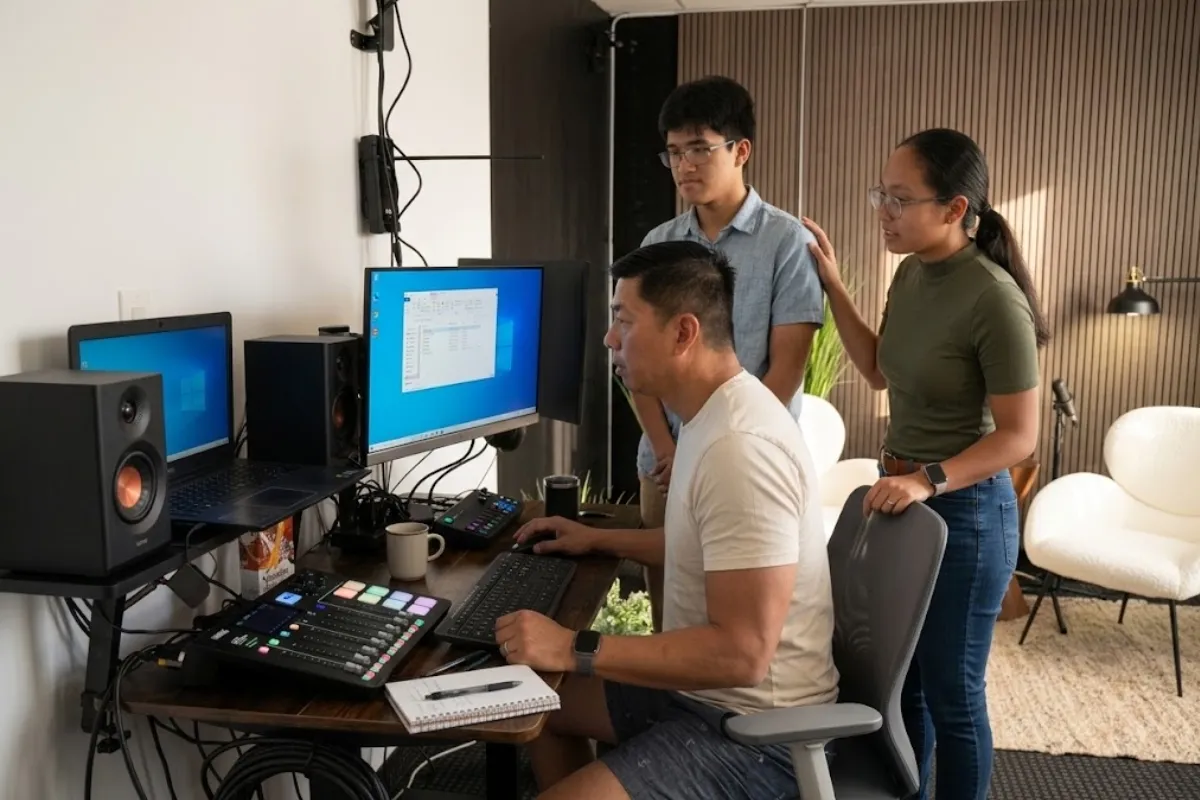
Choosing a comfortable studio helps you focus entirely on your content. When you record at Facet Media Podcast Studio, you do not have to worry about setting audio levels, adjusting three-point lighting, or managing camera angles. An on-site engineer manages the gear for you throughout your entire session.
A well-designed studio supports relaxation through:
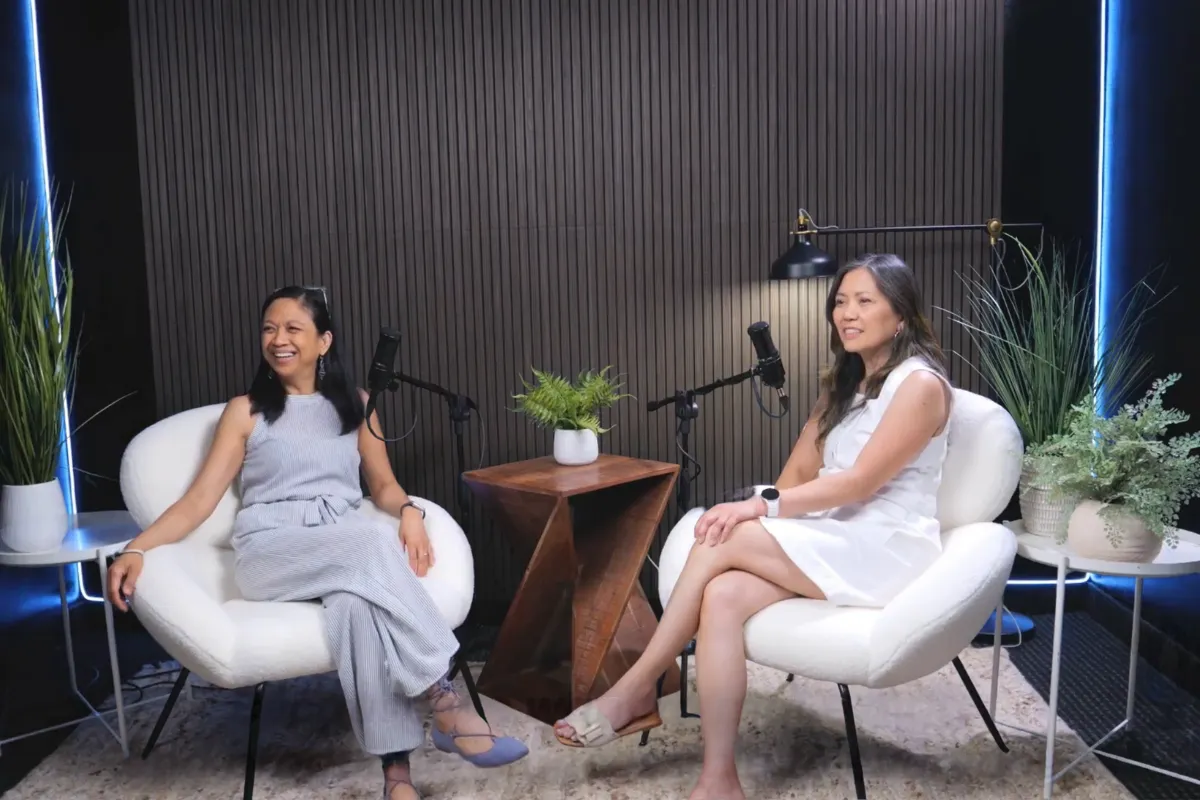
- Welcoming layouts: Cozy seating options, such as lounge chairs with wood paneling or round tables for group chats, make you feel like you are chatting in a living room.
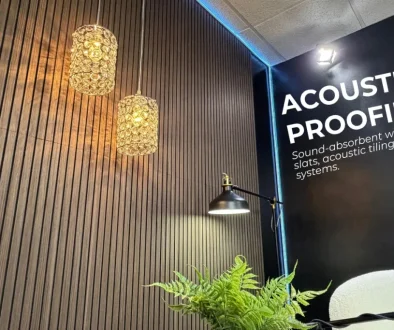
- Proper acoustic treatment: Sound-treated walls absorb harsh echoes, giving you crisp audio without having to eat the microphone.
- Beverage stations: Access to water and coffee helps soothe dry vocal cords and keeps your energy steady.
- Professional guidance: Having an experienced engineer behind the board gives you peace of mind that your files are recording correctly.
A Quick Comparison: Relaxed vs. Anxious Recording
When tension takes over, it affects how you speak and how your audience receives your message. Here is how physical states change your recording session:
| Factor | Anxious State | Relaxed State |
|---|---|---|
| Breathing | Shallow chest breathing | Deep belly breathing |
| Pacing | Rushed and fast-talking | Measured with natural pauses |
| Body Language | Rigid shoulders and stiff posture | Open posture and easy gestures |
| Voice Tone | High pitch or strained sound | Warm, full, and steady tone |
| Mistake Recovery | Frustration and loss of focus | Easy correction with a quick reset |
Practical Warm-Ups to Do Before You Hit Record
Professional speakers do not step up to a microphone cold. Doing a few simple exercises five minutes before your session helps loosen your vocal cords and lower your heart rate.
1. The 4-7-8 Breathing Method
To quickly calm your nervous system:
- Inhale quietly through your nose for 4 seconds.
- Hold your breath for a count of 7 seconds.
- Exhale completely through your mouth for 8 seconds.
- Repeat this cycle four times to slow down a racing pulse.
2. Vocal and Facial Releases
Loosen the muscles you need for speaking:
- Lip trills: Blow air through closed lips to make them vibrate like a motorboat. This relieves tension around your mouth.
- Yawn and sigh: Open your mouth wide in a gentle yawn, then release an easy sigh on your way down. This drops your shoulders and opens your throat.
- Tongue twisters: Repeat simple phrases like “red leather, yellow leather” slowly, focusing on clear pronunciation rather than speed.
3. Review Bullet Points, Not Scripts
Reading a word-for-word script often makes people sound robotic and increases the chance of stumbling. Instead:
- Write out 3 to 5 main talking points.
- Under each point, list 2 supporting facts or stories.
- Trust yourself to speak naturally about the topics you know well.
Frequently Asked Questions
What causes mic fright for new creators?
Mic fright is triggered by the fear of being judged, combined with the sudden awareness that your words are being recorded. This causes a natural fight-or-flight response, leading to a rapid heartbeat, dry mouth, and racing thoughts.
How can I reduce camera anxiety quickly?
To calm down on video, avoid staring into the camera lens. Focus your eyes on your co-host or guest. You can also take deep breaths, loosen your shoulders, and complete a quick two-minute test recording to get used to the setup.
Does studio setup affect podcast nerves?
Yes. A messy or noisy room increases stress because you worry about audio quality. A clean space with soft lighting, supportive seating, and on-site technical help lets you relax and focus solely on your topic.
Conclusion
Experiencing hesitation or anxiety before you speak into a microphone is completely normal. The secret is not eliminating nervous energy entirely, but learning how to redirect it into a friendly, engaging conversation. By using physical breathing exercises, speaking from clear outlines, and choosing an inviting space, you can take control of your recording sessions.
Ready to record your show without the technical headaches? Book your next session at Facet Media Podcast Studio in Paramus, New Jersey. Enjoy broadcast-quality audio, 4K multi-cam video, and dedicated engineer support in a relaxed, creator-friendly space. Visit our website to schedule your studio time or call (551) 788-0014 today.